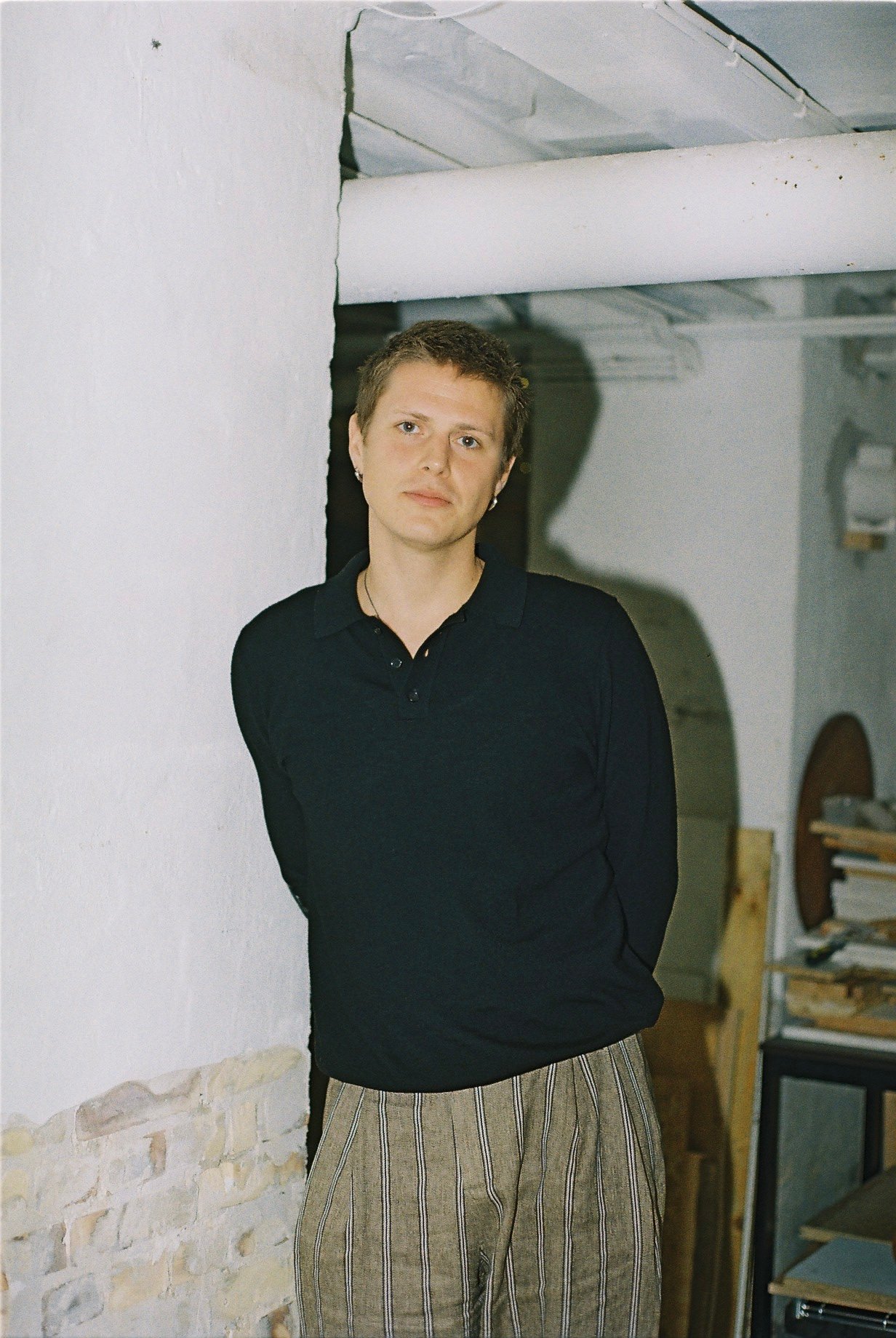
Interview with
Lasse Skovrup
Gallerist & Curator
Interview

Lasse Skovrup

Gallerist & Curator

Driven by a fascination with the systems that shape the art world, Lasse is creating something that resists both commercial pace and the comfort of trends. For him, authenticity is crucial – in art, in people, and in the way things are done. Burnout has taught him that slowing down isn’t failure, it’s precision. Whether he talks about the overuse of the word ‘creative’, the balance between elitism and democratisation, or how fashion has lost its soul to mass production, he speaks with honesty rather than performance. His gallery ‘Galleri Sod’, isn’t only a space for showing art, but for questioning the structures that surround it – a reminder that meaning takes time.
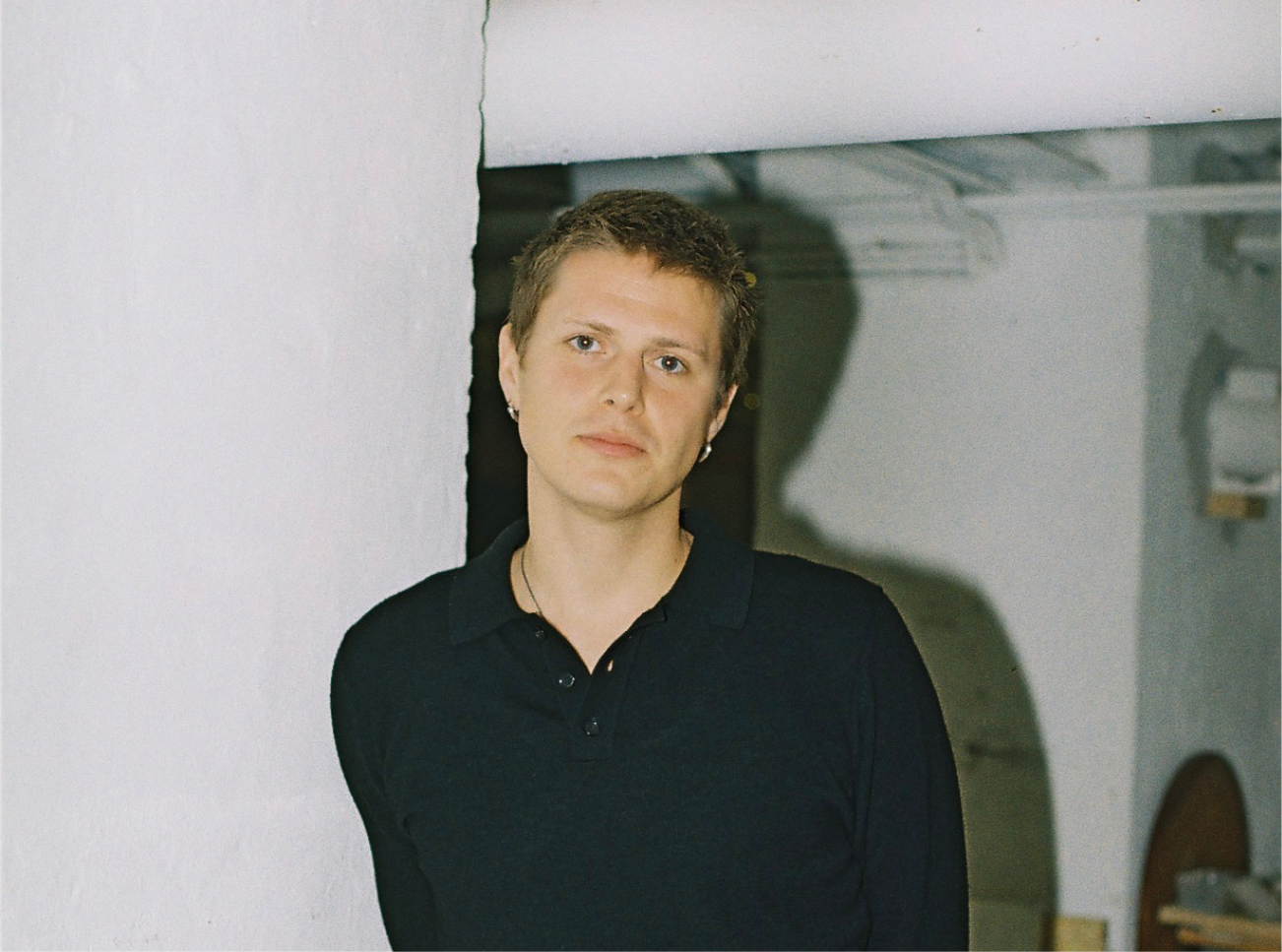
Editor’s note: There’s a clarity in the way Lasse sees things – a way of moving through ideas, structures, and questions without overcomplicating them. You rarely feel wrong in his company. You can say something half-formed, uncertain, even off, and it’s still met with openness. If Lasse disagrees, the perspective is presented without trying to shift yours. What stands out is how steady he remains in conversation – nothing feels exaggerated or reactive, just considered and open, regardless of what is brought into the room.
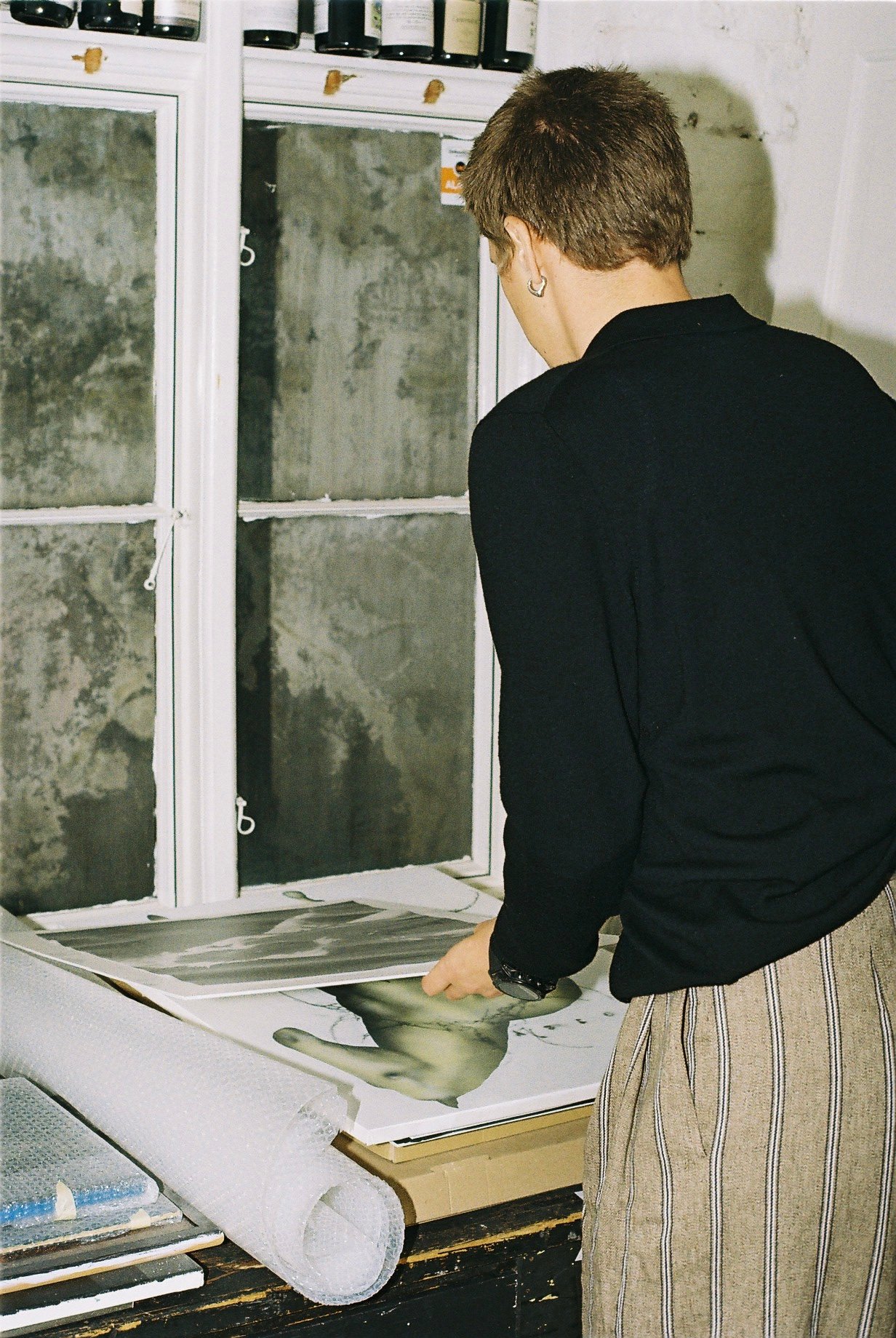
Q no. 01.
Has starting a gallery always been a dream of yours, or what motivated you?

I've always been very interested in exploring art. My parents didn’t collect art, but they had some prints of Michael Kvium’s work on the walls, and as a kid, I was very fascinated by his art. Kvium is not really someone that I'm gravitating towards today, but it did cultivate some sense of taste for me.

When I started university, the appreciation for art kind of deepened even more. I studied Business Administration and Service Management with a focus on art and culture. That’s where I really got to work with the academic literature on art and how you facilitate and talk about art in a highbrow way.

So I really got a taste for it there, and just a year into university, I wrote all my projects about the art world, so it kind of grew from there. At some point, I was sure that I wanted to open my own gallery – I wanted to become this megaphone, a voice for the artists.

I've always seen myself working in the creative industry, but I've never had that itch to make art on a consistent basis – so I kind of swept the idea to the side, because I figured that if I didn't have the desire, then I guess I wasn't necessarily meant to do that. I thought the noble thing to do would be to facilitate and create a platform for artists, because that's also a huge part of the infrastructure in the art world.

There are a lot of institutional mechanisms that help guard the art world – a huge social hierarchy that really fascinates me. And I think that's also partly why I wanted to try doing something in this sphere which then seemed to be a gallery.

Where I am right now, I want to run the gallery more like a non-profit art space. How I've run the gallery in the past year has been a bit more commercial, and having to open an exhibition every month – open one and then close one and then another one, all within the span of a month – that has already, in a year, made me burn out a little. It didn't allow me to put on a quality exhibition, so I kind of figured that I would slow down and really work on my curatorial concepts, because I don't want it to be half-assed. I also think that this new way of running the gallery is what I’m actually passionate about: facilitating and talking about art – inspiring other people and kind of letting them know why this is so fucking cool.

I think I've been very aware that my job right now is to design experiences, which is also a creative act. But I also think that this term ‘creative’ is being overused in today's society and becoming almost generic. Today, creativity is expected in a job application; fifty years ago, it wasn’t something you’d claim. Today it's like that paradigm has shifted, and it's also kind of made the word ‘creative’ lose its value somehow. I'm also a little apprehensive about using that word about myself. I don't necessarily see myself as creative, but I can work creatively.

Oscar Stage, Soft Spot, 2023
Ink, stencil & tattoo needles on raw canvas framed in acrylic glass, 
100 x 70 cm
Photos by Kasper Leegaard 

Q no. 02.
Your clothing style and career path seem to challenge convention – where does that sense of independence, or willingness to go your own way, come from? And have you ever gotten comments on how you dressed?

I think the independence and willingness to go beyond convention has always been there – I've always been very strong willed. I have a very distinct way that I want things done – a bit of a control freak about certain things.

I remember at my 10th birthday, I had been working on some drawings I wanted to show my family. Back then, boys my age dreamt of becoming police officers or something like that, but I wanted to be a fashion designer – which felt very uncommon for a boy my age. My family had invited a lot of people, and I remember feeling anxious about showing the drawings because there was this unspoken stigma around boys who were interested in fashion, often tied to assumptions about masculinity and sexuality. When I showed them, people just looked politely and moved on, but I think the important part of that memory isn’t so much the reaction, but the fear leading up to it – the fear of being placed in a box I didn’t fully understand yet. When you’re that young, things like identity and perception can feel overwhelming, even if you don’t have the words for it. Looking back, it feels like one of those early moments where my interest in creativity started to take shape, even if I didn’t recognise it at the time.

When I started high school, I was very lucky to end up in a really great community of people who were curious, who wanted to explore themselves and explore the creative corners of their minds. That also shaped and inspired me to kind of go on in that direction. Finding the right crowd is what sparked that interest and made me sure of the direction that I wanted to go, without knowing exactly what I wanted to do at that time. 

I've always worked very abstractly, not really having an idea of what the goal was, but I knew what kind of direction I wanted to move. I've never really been focused on a goal, but more like a feeling of where I wanted to go – which is the way I like to operate anyway. And that also spills into how I dress, because it comes in bursts. Sometimes I feel inspired to wear something fun, and other times I just throw on the same uniform for half a year which may still be a bit unconventional – it depends on my mood.

When it comes to expected ways of dressing, I guess you can call it a systemic issue, because of some gender roles that are being pushed onto us, but I think the only way to neutralise and normalise men wearing ‘unconventional’ clothes is to just wear whatever you want. 

When I was younger, the comments bothered me a little bit. For example, if my parents would comment on my clothes, but it was always more an annoyance for me – so it kind of just pushed me further away from convention and in the direction I already was heading. When I present myself to people, I don't try to please them; I show up as myself, and if they like me, I'll pour some energy into that, if they don't, I won’t force it.

I don't really care about other people’s opinions in that way. If something looks cool, then I’m going to wear it. And if I think someone dresses nice, I can take some elements from that and do the same thing or maybe tweak it to fit me. But I don't really think it's helpful to just narrate it as a systemic issue, because if you want to do something about it, then do it – that's how you push the norms. I like people who challenge norms – those people are often more interesting to be around. I only surround myself with people who do that, so I guess I’m in this echo chamber of doing the wrong societal thing, but that’s something I prefer in this scenario – surrounding myself with like-minded people. 

Q no. 03.
The arts can be a tough field to make a living in – what made you choose this path anyway?

I didn't see it as a choice – I was just drawn to it, something that I had to do. Social structures within the art world are something I'm very passionate about, because there are so many problematic issues in that sphere that I want to challenge, and that I want to do something about. That passion is what led me to it, and you can't really compromise with that. I'm going to make money some day, not now for sure, but some day it's going to happen. I'm going to be making a comfortable living – I'm never going to be a billionaire, but who wants that anyway? I think it's a drive that kind of transcends money. 

I also have two side hustles: I’ve been working at this clothing brand for years now, and the other one is a pharmacy consultancy. I like the change, it’s nice to do something completely different, to reset my mind. The clothing store job is steady and it has gotten easy over the years because I've done it for so long. The pharmacy consultancy is not really something that I'm passionate about, but it puts bread on the table. On the other hand, it’s a new field, something I don’t know anything about, so in that sense it’s super interesting – I’m learning something new every day and it’s nice to get out of your usual habitat. Most artists and creatives have some sort of side hustle to make a living – if they haven't gone big yet. And even then, some still have a part-time job or a full-time job, or are on a budget.

Throughout university I've been living on a pretty low budget, and I don't have a problem with keeping on doing that, if it's something that I like doing. Being on a budget is of course a little challenging, and there have been some sleepless nights here and there. But I’m still in no doubt that this is what I want to do, so I'm going to continue doing that. I might take some detours here and there, and I don't even know if I'm going to work in the art world for the rest of my life – it’s unknown, and that's how I like it. I want to keep my options open and do what I want at the moment, and I'll take it from there – just one day at a time.

I've always had this idea since I was a kid that I was going to become famous some day. That idea has kind of translated into “I'm going to do something significant in this world”, and I am still convinced that I will. It's going to happen, I just don't know when.

Mikkel Rohde Skovlunde, 
Composition no. 24, 2024
Antique boxing gloves, fossil of prehistoric plant, 36 x 17 x 26 cm
Photo by Jesper Drejer

Q no. 04.
Why contemporary art, and what kind sparks your interest the most?

Grassroots has always interested me because it challenges norms. It can be rough and unrefined, which is where I step in to help guide or refine the project. It’s a form of activism driven by people with something real to say. Independent and critical, it questions societal structures through unconventional materials.

That's also something I get a lot of enjoyment from – trying to guide some artists who don't really know what to do next. It's usually not about the visual aesthetic of the art piece. That could use some refinement. It's more about the composition, the subject matter, the narrative behind the work, and so on – because that's equally important. Sometimes it’s the narrative that makes an artwork stand out.

I want to kind of dance on the line between grassroots and the slightly more established, because that also gives legitimacy to the grassroots and makes it more accepted. But if I exhibit a big artist, then I would obviously accept it, but it still has to align with my values – otherwise, it wouldn't really make sense to me.

I think authenticity is super important when you run your own business. You need to portray something real, otherwise, people are going to see right through it – and you're not going to enjoy it as much either.

Classic art is something I respect a lot, and I'm well aware that we're standing on the shoulders of giants today. But since the early 1900’s, there's been a huge disruption in the art world where you would challenge this idea of art being purely aesthetic and into it having depth, having something more than just the visual, and for me that’s very important.

Consider conceptual art like Dadaism with Marcel Duchamp. He was one of the first ones to shape contemporary art, where he took this ready-made urinal, and he called it ‘Fountain’ – a very famous example. Today it may look simple, but he was the first to approach it in that way, which was groundbreaking for its time. All of the art pieces and artists that sprung out from that movement, really pioneered how the art world is today, and suggested a new way for art to be interesting.

Today’s contemporary art is why big museums draw so many visitors in the 21st century. It's becoming interactive, something that's not just for the few, but for everyone. When we talk in that direction of contemporary art, democratising it, then I don’t really know where I stand, because I think  gatekeeping is extremely important in a way. It's a necessary part of any creative field – if anyone can do it, it’s not interesting. That’s why it’s frustrating to hear everyone calling themselves ‘creative’. It leads people to see art as a hobby, not as a profession, and they don’t value the work of those who actually make a living from it. So, some things have to be gatekept; you want some interest, something not meant for everyone to achieve. Avant-garde art or creative practices are often misunderstood at first, because they’re not for everyone. For example, today we see trans people doing both art and fashion, and people complain that it’s not wearable or that they don't get it – but it’s not for you, it’s for a different group of people. It’s for a niche group, and as society grows and learns to appreciate that, we start to understand what it means.

In my opinion, gatekeeping is a necessary part of any infrastructure for people to fully appreciate something. Appreciation needs to grow organically. So when you see people on TikTok complaining about gatekeeping – complain all you want, but it’s never going to go away. It’s a necessary part of creativity. So when you see ultra interactive exhibitions like the popular ‘Soft Robots’ exhibition at Copenhagen Contemporary, it’s super interactive and easily digestible, filled with impressive visuals – and that’s nice, but where’s the depth?

I often talk about the balance between elitism and democratisation. I think we should land somewhere in the middle, where art still has status and remains special because it evokes feelings. But it shouldn't either be something so exclusive that it pushes people away because no one understands it. So you need to strike a balance in terms of contemporary art. 

Unfortunately, we’re moving toward extreme democratisation, where art is being dumbed down, and I don’t appreciate that – we should find a middle ground.

Contemporary art is a broad genre, but for me the art form in general is important. I don’t just want to exhibit paintings where people come to look and then forget. I want to give depth to the experience, and that’s why curatorial ideas and concepts are central in exhibitions. I want people to leave with a long lasting impression, something that gets them thinking. That’s why I do what I do – it gives me purpose. 

“Art demands a lot from you. It demands you to research. It demands you to go in depth with it and spend time with it – not just with the pieces themselves, but also in learning to decipher and decode them."

Mikkel Rohde Skovlunde, 
Composition no. 21 (Tending to a sleeping angel (2)), 2024
Wooden pallet, found pillow, dead hornet, 49 x 49 x 19 cm
Photos by Jesper Drejer


That is what’s needed to get real enjoyment from it. You need to slow down and truly wonder “what is going on with this piece?”.

But you can’t satisfy everyone. The creative industry operates along these spectrums, where you need to achieve a balance, and that's extremely challenging to do – almost impossible. Someone will always complain. And then there's another layer to it, which is that a lot of creative endeavours, and creative businesses are not necessarily viable. Society agrees we need creative products: we need art, we need music, we need all these things, but it's not always a feasible product in the market. Historically, the creative industry has gotten a lot of both public and private funding. To secure funding, you often have to appeal to the broader public, which requires compromises and adjustments toward mass entertainment.

In general, it's super hard to make a living in the art world and in the creative industry because of these structures – which is super problematic. We try to push this capital market logic onto the creative industry, but it doesn’t work like that. That's also something that I'm very passionate about, because it’s a huge issue. We live in a society where capital interest has such a big influence on what we do and therefore on creative expression, and it shouldn't, because that's going to make it dishonest, it's going to make it flat and ultimately ineffective. The creative industry doesn't work today because it pushes market logic onto an industry that's not an industry. It shouldn't be called ‘the creative industry’, it should be called ‘the creative sphere’ or something like that – completely separate from the market.

In my opinion, we should abandon all market logic and ensure equal pay for everyone. That way, people can enjoy doing what they love. Career choices wouldn’t be dictated by salary. Those who love teaching can teach, those passionate about baking can bake, and those with a burning passion for art would create art.

Right now, I don’t think it’s so much about people wanting to be artists as it is about wanting the perks that come with it. Like I mentioned before, the word ‘creative’ has become so overused that it’s almost lost its meaning – and I think the same thing is happening with the idea of being an artist. It has become an identity, something that looks appealing from the outside, rather than a practice that grows from genuine curiosity or need.

You see it online all the time – people performing creativity instead of living it. It’s not necessarily about the work itself, but about what it represents. And maybe that’s just where we are now – art and performance have become so closely tied that it’s hard to tell them apart.

Q no. 05.
What makes a piece of art meaningful to you, and how do you usually engage with it? Is there something specific you look for?

Authenticity. When an artwork is authentic and doesn’t pretend to be something it’s not. And if the artist doesn’t pretend to be someone they’re not. It shines through them and into the artwork they create. It’s the most precise word I can come up with – art needs to be authentic.

Art is something that also makes the public a nicer place to be – it’s all around. For example, there’s art in urban planning, where they put huge sculptures to block access for cars to prevent them from entering the pedestrian street, and therefore it has a function of protecting pedestrians.

Art can be so many things, and depending on what it is, it means something different to me. Usually, when I go to museums or gallery openings, it’s more of a treat for myself – a personal experience. It’s nice to do with others, but I often go alone, so I can really dive into it. That way I can reflect on it quietly, without having to talk – just being present in it. It means a lot to me, kind of a safe space where I can be with myself.

But I don’t really think there’s a specific thing that I look for – sometimes it just strikes me. I think it’s one of those things where there’s no recipe for it. Sometimes it’s just there, and everyone who sees it agrees that it’s there.

In the first exhibition I threw at the gallery, there was this huge painting of horses fighting. I could have sold that painting maybe ten times, because people just fucking loved it. The other works were great as well, but this one just stood out for some reason – it had this ‘je ne sais quoi’ to it. Sometimes it’s simply a feeling.

Line Sondrup Nielsen, 
Hovslag fra hjertet II, 2024
Ink and coloured pencil on cotton canvas, 130 x 180 cm
Photo by Kasper Leegaard

Q no. 06.
You’ve always been well dressed – what’s your relationship to fashion?

As I mentioned earlier, I thought I would become a fashion designer when I was a kid, so fashion has always played a big role in my life. I’ve always cared about how I dress – and I’ve always wanted to challenge it too. Since I was little, I’ve loved clothes. I like exploring clothes rather than just wearing them. I like to touch the clothes when I go into stores and feel the construction, the materials, the weight of things.

I like to dive into the history of garments as well, and how that inspires new ones today. It follows many of the same processes as art. It comes from somewhere – there are thoughts behind it. 

People would agree that fashion is also art, but I also think there’s a distinction between those two things because art doesn’t have to be functional. Art is art simply because it’s art – it doesn’t need a function. Clothes are a utilitarian item – they have a function. They’re for you to wear to not get cold, to not get burnt by the sun, etc. But then again, there are also these cool runway shows where there are thoughts and meaning behind the collection, how the runway is designed, how everything connects. We don’t really see that today, because it’s more about profit, and there’s basically no room for artistic expression in fashion as there once was. Sometimes there is, but mostly there isn’t.

I guess that also brings me into the fashion industry, because as soon as you add the word ‘industry’ to fashion, just as with ‘creative’, it changes the way we perceive it. It becomes machinery, it becomes something unnatural – and that’s also where it becomes a bit gross with overproduction and overconsumption. Social media and online endeavours play a huge role in that, because they distort the focus and corrupt everything. It’s more about consumption than about personality, passion, and interests. It’s about wanting to fit in with trends, to be like everyone else, rather than diving into the history of clothes because you’re genuinely interested in it.

My relationship with fashion is very complex, because it’s something I’ve liked for so many years. And when you have a deep interest in something, you also see the dark sides of it – how it affects the people working in factories, how designers are underpaid, while Creative Directors and CEOs are the outward faces – and rich as fuck, in some cases at least. The more you learn, the less you like it – yet you can’t stop liking it, it’s so contradicting.

Mikkel Rohde Skovlunde, 
Machine of spiritual transcendence, 2024. Scrap from deconstructed speaker, mummified mouse, ceramics vessel, 28 x 19 x 20 cm
Photo by Jesper Drejer

Q no. 07.
What has been the biggest challenge of starting and running a gallery in your twenties? Is there anything that surprised you since starting a gallery?

A lot of things, honestly. If I had known how expensive it would be, I don't think I would have started it. I got the opportunity for a space pretty randomly through a friend. The gallery is in the front area of a huge tattoo studio and a creative space with a lot of different creative forces. It’s basically a huge creative melting pot, so I was asked if I wanted to join and have a gallery there. It’s been a dream of mine for years, so I even signed the contract without seeing the space at first – only from pictures. I kind of wish I had done a bit more research. I wish I had built a more stable financial foundation for it before jumping in. But it’s not like I regret doing it – I just know what to do next time, and that’s a good thing.

There have been a lot of challenges. It also raised big questions about integrity and why I’m doing this. I do it because I genuinely love talking about art. I love facilitating it and kind of broadening it out to the public – not necessarily because I want to sell the art. At first, I thought it would be cool to sell expensive art pieces – and maybe it still is, but that shouldn’t be the motivation behind it, because I burned out from it.

But I feel like I’m on a good path now. I’ve found a better business model for the gallery, with fewer expenditures, and it’s more organic now. I don’t make money from it, but it’s building a foundation for something later in life.

So yes, there have been plenty of challenges and awful parts, but it has taught me what it really means to run a business, what it means to trace a career path – and somehow, to listen to myself too.

Q no. 08.
How do you see your role in translating art from creation to exhibition?

My key role is to present the art in a way that feels true, also to potential buyers. The artist might already have a concept, but they need a space, and then we work from there to build on the narrative they’ve already created and make it fit my space. Because inevitably, a piece of art made in a workshop or studio takes on a new presence when moved into another space – it becomes a different setting.

I think, among others, it was Boris Groys, the German philosopher and sociologist from the 1940’s, who said that everybody is an artist. He kind of spurred that idea of creativity that we see today – which is both a good and a bad thing. But he also talked a lot about the idea of having an artwork and changing its scenery. For example, if you take an artefact from a tribal culture in Africa and put it into the British Museum – very problematic, but it has happened many times – then it means something different. It becomes a tale of colonialism and a lot of other things beyond the culture it represents.

That’s the same thing with changing an artwork from its original setting where it was created into a gallery. Because then it also changes its purpose – from something that was created in the workshop out of passion and creativity, into something that has to be sold. It changes its aura, its role, its spirit. So you need to think about that, and do it in a tasteful manner as well. When the artist has an idea or a concept for an exhibition they want to do and they come to me, we have to rethink it into something that doesn’t have this tacky, capitalist agenda behind it.

For example, the ‘Manic Pixie Dreamgirl’ exhibition was special because it was the first time I did an open call and in collaboration with another gallery. The open call was a good way to do the exhibition and a really interesting casting process, because I didn’t have to put words in the artist’s mouth. I didn’t have to find an artist whose aesthetic would fit the concept and narrative – they could tell me themselves. It was very interesting to see how they interpreted the theme of the exhibition and how that came to fruition. It ended up being less about the film concept itself, and more about how that idea translates into other parts of society.

The ‘Manic Pixie Dream Girl’ is this fictional female character every man wants: she’s cool, quirky, spontaneous – and doesn’t take herself too seriously. But the guy is never interested in diving deeper into her as a person, because he has what he needs in her external image. So this also flattens the Manic Pixie Dream Girl – she becomes a two-dimensional object for the male protagonist’s own self-development. And the keyword here is ‘Dreamgirl’ – she doesn’t exist; she’s a male fantasy. That’s of course a very problematic thing, but it’s also something that’s not exclusive to films. It seeps into many corners of society and the female experience; even though I don’t have that experience myself as a man, I can still tell, from how women are still oppressed in society. Of course, we’re lucky to live in Denmark, where it’s quite an equal country, but it’s far from entirely equal and equitable.

That’s also why the exhibition was relevant, and why I was really excited that the artworks didn’t only express the film angle of what a Manic Pixie Dream Girl is, but also how it had an impact on the artists’ lives.

There were, for example, these two works of Venus and Aphrodite – the original ‘Manic Pixie Dream Girls’ – where these goddesses were shown as the ideal of how a woman should be. They were archetypes of how women should act in society, but obviously through the eyes of men. And that’s also what the ‘Manic Pixie Dream Girls’ in films do – they mirror how men would like women to act. How women should have the same male stereotypical hobbies as men, or else they’ll never find a man. And that’s a very problematic thing to show girls and women, that they shouldn’t be women with their own interests and that they aren’t enough as themselves, unless they mirror a masculinity disguised as freedom. It’s a very male-centred personality, it’s rooted in misogyny and very unhealthy.

What I want to achieve with the gallery – or exhibition space, is to create a more equitable playing field for artists, and other actors in the art world, such as myself. It doesn’t have to be a zero-sum game. That’s what I’m aiming for with the gallery, so I’m in the process of making a blueprint for how we can achieve an outcome where all the different voices involved can feel like they’ve been heard, and that we can walk away with a good feeling.

Portraits by Mariia Dromova
All rights reserved.